
Hormone Imbalance in Women Over 40: Symptoms, Causes and What Helps
For many women, the 40s bring changes that are hard to pin down: weight gain, mood shifts and poor sleep. Often the cause is a shift in hormone levels as perimenopause begins. This guide explains why it happens, the symptoms it can cause, and the practical steps that help.
Part of our blood test results guide: what each marker means and when it is worth testing.
Key takeaways
- Falling and fluctuating estrogen and progesterone during perimenopause and menopause are a normal part of ageing, not an illness.
- The effects are physical (hot flushes, weight change, bone health) and emotional (mood swings, brain fog, anxiety).
- Food, exercise, sleep, stress management and gut health all support hormone health; some women also benefit from hormone therapy.
Why do hormone imbalances happen in women over 40?
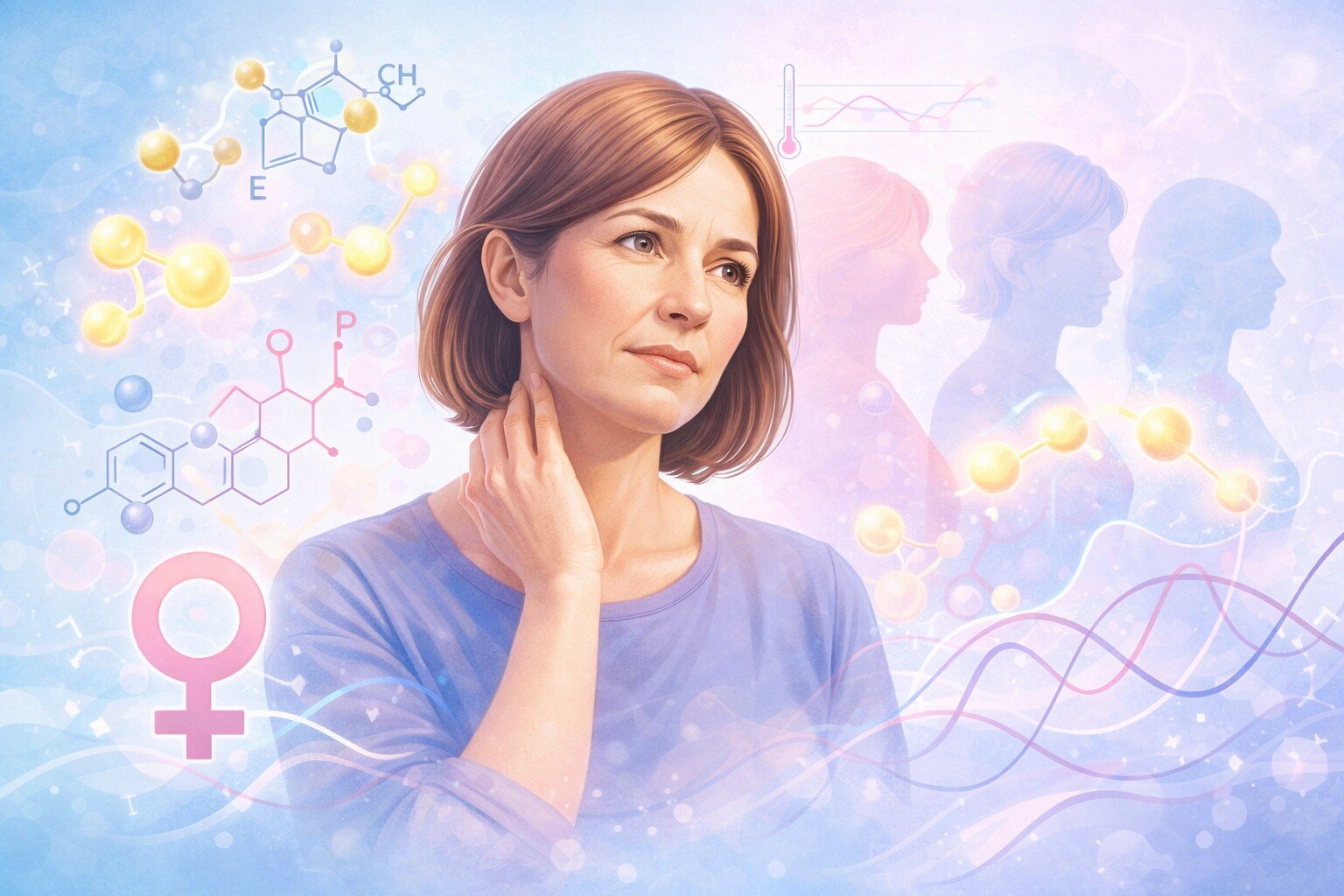
As women move into their 40s, the body goes through a natural transition called perimenopause, and later menopause. Estrogen and progesterone, made by the ovaries, start to fall and fluctuate unpredictably. This is a normal part of ageing that marks the end of the reproductive years, not a sign of illness.
The drop affects more than periods. Estrogen plays a role in bone health, heart function, mood and metabolism, so these areas can be affected too. The body responds by releasing more FSH to stimulate the ovaries, which adds to the ups and downs. The changes start slowly and grow stronger as menopause approaches.
What changes during perimenopause and menopause?
During perimenopause, which can start in your late 30s or early 40s, estrogen levels swing a lot. That can cause irregular periods, mood swings and sleep problems. Progesterone, which balances estrogen and supports calm, often falls first. That can bring anxiety, irritability, breast tenderness and heavier periods.
After menopause, estrogen and progesterone stay low, which causes many of the typical symptoms. Cortisol, the stress hormone, can also get out of balance and stay high at night, making tiredness, poor sleep and weight gain worse.
How hormone changes affect physical health after 40
Bone and muscle health is a major concern. Estrogen helps keep bones strong, so when it falls, the risk of osteoporosis (weak, fragile bones) rises. Loss of muscle can also affect strength and mobility.
Heart health is affected too. Estrogen helps keep blood vessels flexible and helps control cholesterol. When it falls, the risks of heart disease, high blood pressure and raised LDL cholesterol go up.
Other common changes include vaginal dryness, urinary problems, thinning hair, dry skin, and hot flushes or night sweats that disturb sleep and energy.
Can these changes affect mood and mental well-being?
Yes. Estrogen helps regulate brain chemicals such as serotonin and dopamine that keep mood steady. When it drops, it can lead to tiredness, irritability, anxiety and even depression. Progesterone, which usually helps calm anxiety, also falls, which can bring mood swings. These feelings are not your fault; they are how the body reacts to changing hormones.
Poor sleep from night sweats and low energy can make this harder. Lack of sleep can increase anxiety and low mood, and make it harder to remember things or focus, often called brain fog.
The link between gut health and hormone balance
Your gut bacteria help manage hormones, especially estrogen. A group of gut bacteria called the estrobolome makes an enzyme that helps the body process estrogen properly.
When the gut is healthy, estrogen is either reused or safely removed. When gut bacteria are out of balance (dysbiosis), this process can be disrupted, leaving too little or too much estrogen.
Ultra-processed foods, stress, low fibre and antibiotics can all upset gut bacteria. As well as bloating and constipation, this can affect hormone regulation by increasing inflammation. Foods rich in prebiotic fibre (onions, garlic, asparagus) and probiotic foods (yoghurt, kefir, kimchi) support a healthy gut.
Lifestyle changes that support hormone health
- Eat whole foods. Lean protein helps keep muscle, healthy fats such as avocado and olive oil support hormone production, and vegetables and whole grains give steady energy. Cruciferous vegetables such as broccoli help the body process estrogen, and foods with phytoestrogens, such as flaxseed and soy, may ease symptoms.
- Limit added sugar, alcohol and ultra-processed foods, which can drive inflammation.
- Move regularly. Cardio helps your heart and mood; strength training builds muscle, supports metabolism and helps bone health.
- Manage stress. High cortisol can disrupt sleep and hormones. Yoga, meditation, slow breathing or time outdoors can help.
- Sleep 7–9 hours a night so your body can recover.
How to start
Start by noticing your symptoms. Track your energy, mood, sleep, periods and any physical changes. This helps when you speak to a doctor who understands hormone health in women over 40. Tests such as thyroid, insulin, vitamin D and hormone levels can help find the cause.
From there, build a plan that fits you, with food, exercise and stress management at its centre. For some women, lifestyle changes are enough; others benefit from hormone therapy, which is a decision to make with your doctor. The plan should change as you do.
At HDC Medical, our hormone test profiles and women’s health blood test include a one-to-one review of your results with personalised nutrition guidance.
Related reading: Menopause and perimenopause testing , Hormonal imbalance symptoms , AMH and FSH tests .
This article is for general education and does not replace personalised medical advice. Reference ranges vary between laboratories — always interpret your results with a qualified professional. HDC Medical is a dietitian-led health screening centre in Oval Damansara, Kuala Lumpur.
Frequently asked questions
Why do hormones change after 40?
Perimenopause and menopause cause estrogen and progesterone to fall and fluctuate. This is a normal part of ageing that marks the end of the reproductive years.
Can food help with hormone symptoms?
A diet built on whole foods, lean protein, healthy fats, vegetables and whole grains supports hormone health. Limiting added sugar, alcohol and ultra-processed foods also helps.
Which tests check hormone health?
Hormone levels, thyroid, insulin and vitamin D tests can help find the cause of symptoms. A doctor or our team can advise which apply to you.
Get your hormone results reviewed one-to-one.
Book a dietitian-led screening at HDC Medical in Kuala Lumpur. Your results explained in plain language, with a plan to follow.