
Antioxidant Blood Test: Your Antioxidant Status from Vitamins A, C, E, D, CoQ10 and Carotenoids
Many people take vitamin and antioxidant supplements without knowing whether they are low in the first place. The Antioxidant & Vitamins Profile measures the levels of key vitamins, carotenoids and CoQ10 in your blood. This guide explains what it covers, who it suits, what it cannot tell you, and why the evidence does not support high-dose antioxidant supplements for everyone.
Part of our blood test results guide: what each marker means and when it is worth testing. New to testing? Start with our guide to getting a blood test in KL.
Key takeaways
- The profile measures vitamins A, C, D and E, CoQ10 and five carotenoids in one blood sample.
- Carotenoid levels such as lutein and lycopene mostly reflect how many fruits and vegetables you eat .
- Large trials have not shown that antioxidant supplements prevent disease in well-nourished people, and some caused harm.
- If you only want to check vitamin D, a simpler test is cheaper.
- At HDC Medical the profile costs RM1,500 , including an InBody scan and a one-to-one review of your report.
What the antioxidant blood test measures
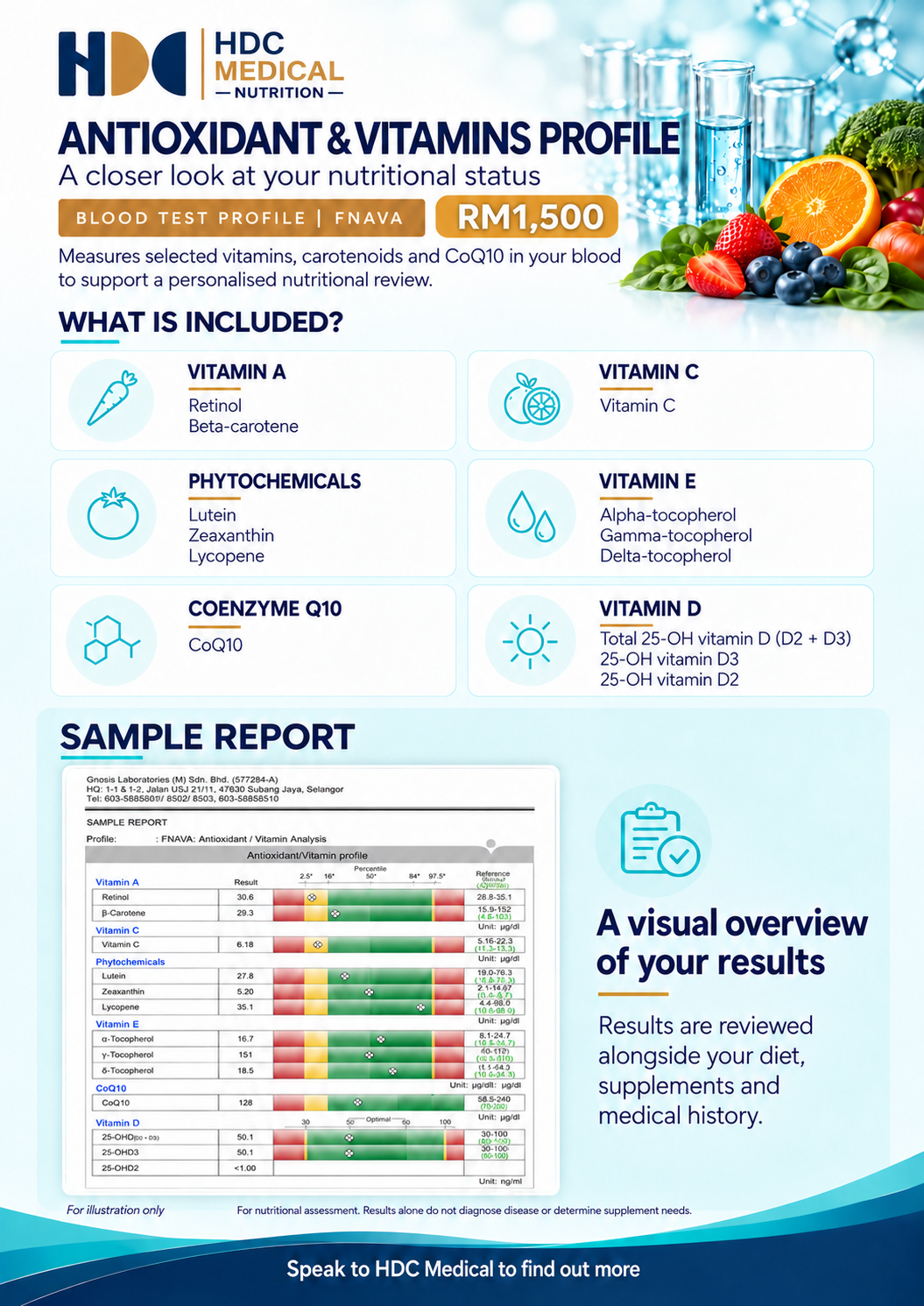
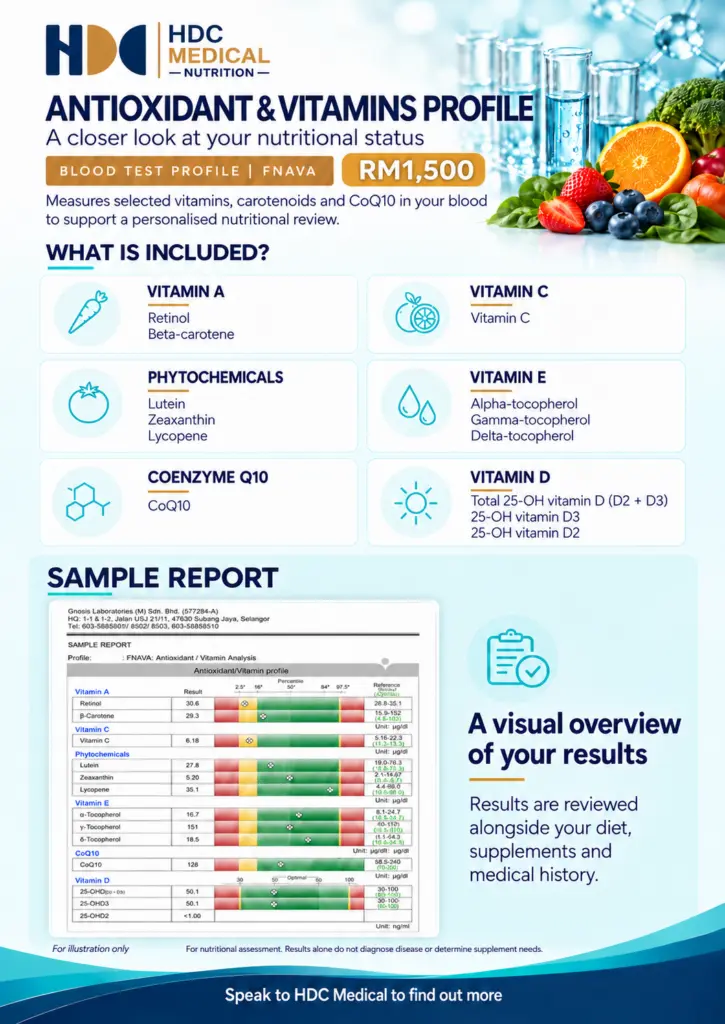
The test uses a blood sample and is analysed by Gnosis Laboratories. It reports:
| Group | Markers |
|---|---|
| Vitamin A | Retinol, beta-carotene |
| Vitamin C | Vitamin C |
| Vitamin E | Alpha-, gamma- and delta-tocopherol |
| Vitamin D | Total 25-OH vitamin D, with D3 and D2 separately |
| Carotenoids | Lutein, zeaxanthin, lycopene |
| Coenzyme Q10 | CoQ10 |
What each nutrient does
- Vitamin A supports vision, skin and immunity. Beta-carotene from orange and green vegetables can be converted to vitamin A.
- Vitamin C helps form collagen, supports immunity and improves iron absorption from plant foods.
- Vitamin E protects cell membranes from oxidation.
- Vitamin D helps you absorb calcium for bones and muscles. See our vitamin D test guide .
- Lutein and zeaxanthin collect in the retina of the eye. Lycopene comes mainly from tomatoes and watermelon.
- CoQ10 is used in energy production inside cells. The body makes its own, and some cholesterol-lowering medicines (statins) can lower blood levels.
Free radicals, oxidative stress and your antioxidant defense
Your cells make free radicals, also called reactive oxygen species, as a normal part of producing energy and fighting infection. Smoking, pollution and other environmental pollutants add more. When free radicals outnumber the body’s antioxidant defense, the result is oxidative stress, which can cause oxidative damage to fats, proteins and DNA. Oxidative stress is associated with many chronic diseases, including cardiovascular disease and neurodegenerative conditions, although it is usually one factor among many rather than a single cause.
The body’s antioxidant defense systems have two parts. Enzymatic antioxidants, such as superoxide dismutase, catalase and glutathione peroxidase, are made by your own cells. Non-enzymatic antioxidants include glutathione, uric acid and albumin, and the nutrients you get from food: vitamins C and E, carotenoids such as beta-carotene and lycopene, and CoQ10. This test measures the main dietary non-enzymatic antioxidants, which is the part you can change through food.
Antioxidant blood test vs oxidative stress test
These names are often used loosely, but they measure different things:
| Test | What it measures | At HDC |
|---|---|---|
| Antioxidant blood test (this profile) | Levels of specific antioxidant nutrients: vitamins A, C, E, D, carotenoids and CoQ10 | Antioxidant & Vitamins Profile, RM1,500 |
| Oxidative stress test | Biomarkers of oxidative damage, such as F2-isoprostanes and oxidised LDL | Included in the Atherosclerosis Progression-META test |
| Total antioxidant capacity (TAC) | The combined antioxidant activity of a blood sample, using assays such as FRAP; similar assays such as DPPH are mostly used to test foods | Not offered: results are hard to interpret for an individual |
| Glutathione (GSH) and antioxidant enzymes | Glutathione and enzyme activity inside red blood cells | Not included |
So a normal result on this profile tells you that your antioxidant nutrient intake looks adequate. It does not measure how much oxidative stress your body is under.
Who might consider this test
- You follow a restricted diet , eat very few fruits and vegetables, or have a history of disordered eating
- You have a condition that affects fat absorption , such as coeliac disease, inflammatory bowel disease or past weight-loss surgery
- You take several supplements and want to check whether you need them, or whether any level is too high
- You want a baseline before a major diet change
For tiredness, hair loss or low energy, our Nutrient Deficiency Test , which covers iron, ferritin, B12, folate and vitamin D, is often the better first step.
How to prepare for an antioxidant blood test
- A simple blood draw from your arm is all that is needed.
- Fasting may be advised, because a recent meal can change the levels of fat-soluble vitamins and carotenoids. We will confirm when you book, and fast for 8–12 hours if the same blood draw includes glucose or a lipid profile.
- Tell us about every supplement you take, including the dose, so we can read your antioxidant status correctly.
- Keep your usual diet in the days before the test, so the result reflects your normal intake.
What this test cannot tell you
- More is not better. Large trials of beta-carotene and vitamin E supplements did not prevent disease, and beta-carotene supplements increased lung cancer risk in smokers.
- Blood levels reflect recent intake , especially for vitamin C and carotenoids, so a single result is a snapshot.
- Results do not diagnose disease or prove that a supplement is needed.
- It is not a test of "oxidative stress" overall. It measures specific nutrients, not how well your body copes with oxidation.
How to raise low levels through food
- Colourful vegetables and fruit daily: carrots, sweet potato, papaya and dark leafy greens for beta-carotene and lutein
- Tomatoes, especially cooked, and watermelon for lycopene
- Guava, citrus and capsicum for vitamin C
- Nuts, seeds and plant oils for vitamin E
- Oily fish and egg yolks for vitamin D, plus sensible sun exposure
- Ask before taking high doses. Fat-soluble vitamins (A, D, E) build up in the body and can reach harmful levels
Price and booking at HDC Medical
The Antioxidant & Vitamins Profile costs RM1,500 at HDC Medical in Oval Damansara, Kuala Lumpur. The price includes an InBody body-composition scan and a one-to-one review of your report with our dietitian team, who will give you a food-first plan and tell you which supplements, if any, make sense.
Message us before you book so we can check whether this profile or a simpler test fits your question.
Related reading: vitamin D test , nutrient deficiency test , ferritin test , blood test packages .
References
- Bjelakovic G, et al. Antioxidant supplements for prevention of mortality in healthy participants and patients with various diseases. Cochrane Database Syst Rev. 2012;(3):CD007176.
- The Alpha-Tocopherol, Beta Carotene Cancer Prevention Study Group. The effect of vitamin E and beta carotene on the incidence of lung cancer and other cancers in male smokers. N Engl J Med. 1994;330:1029–1035.
- NIH Office of Dietary Supplements. Vitamin and mineral fact sheets .
This article is for general education and does not replace personalised medical advice. Reference ranges vary between laboratories — always interpret your results with a qualified professional. HDC Medical is a dietitian-led health screening centre in Oval Damansara, Kuala Lumpur.
Frequently asked questions
What does an antioxidant blood test measure?
Our antioxidant blood test, the Antioxidant & Vitamins Profile, measures vitamins A, C, D and E, CoQ10, beta-carotene, lutein, zeaxanthin and lycopene. It shows your antioxidant status from food and supplements, not your overall level of oxidative stress.
What are the symptoms of low antioxidants?
Low antioxidant levels usually cause no specific symptoms. A marked deficiency of a single vitamin can: for example, low vitamin C can cause bleeding gums and slow wound healing, and low vitamin A can cause poor night vision. A blood test is the only way to know your levels.
What is an oxidative stress test?
An oxidative stress test measures biomarkers of oxidative damage, such as F2-isoprostanes and oxidised LDL. At HDC these are part of the Atherosclerosis Progression-META test. The antioxidant profile measures antioxidant nutrients instead.
Does this test measure glutathione?
No. Glutathione is made inside your cells and is not included in this profile. The test focuses on the dietary antioxidants you can change through food and supplements.
Should I take antioxidant supplements?
Not routinely. Large trials have not shown that antioxidant supplements prevent disease in well-nourished people, and some caused harm. Test first, and get most of your antioxidants from food.
Does a statin lower CoQ10?
Statins can lower blood CoQ10 levels, because they block part of the pathway the body uses to make it. Whether CoQ10 supplements help muscle symptoms on statins is still debated; speak to your doctor before changing any medicine.
How much is an antioxidant and vitamin test in Malaysia?
At HDC Medical the Antioxidant & Vitamins Profile costs RM1,500, including an InBody scan and a one-to-one review of your report.
I only want to check vitamin D. Do I need this profile?
No. Vitamin D is included in our Nutrient Deficiency Test and several packages, which cost less. See our vitamin D test guide.
Test first, then decide which supplements you actually need.
Book a dietitian-led screening at HDC Medical in Kuala Lumpur. Your results explained in plain language, with a plan to follow.